
How to Know If a Home Is Overpriced
Real Estate, Home Buying, Property Valuation
How to Tell If a Home Is Overpriced: A Practical Guide for Buyers
Before you fall in love with a listing, learn how to analyze comparable sales, condition, location, and renovation potential so you can spot an overpriced home and negotiate with confidence.
Why Overpricing Happens More Often Than You Think
Many homes hit the market with price tags driven more by emotion than evidence. Sellers may anchor to what they “need” to net, what a neighbor claims they got, or a number suggested months ago in a hotter market. As a buyer, your job is to step back and ask: What is this home actually worth today?
Determining that value requires an informed, analytical approach. That means digging into comparable sales, property condition, repair costs, location, features, and renovation potential—then comparing your findings to the asking price. The more methodical you are, the less likely you are to overpay or walk away from a fair deal.

Treat a home purchase like an investment decision, grounded in facts and recent data.
1. Start With Comparable Sales: Your Pricing Foundation
Comparable sales—often called “comps”—are recently sold homes that are similar in size, style, age, and location to the property you’re considering. They are the most objective starting point for determining whether a home is overpriced. Focus on sales from the last 3–6 months within roughly a one-mile radius, adjusting for urban or rural areas as needed.
Match the basics: Similar square footage, bedroom and bathroom count, and lot size.
Check age and style: A 1950s ranch is not directly comparable to a brand-new modern build nearby.
Stay close: Crossing a major road, school boundary, or neighborhood line can change values dramatically.

True comparables share similar size, style, and location—not just the same ZIP code.
A Simple Comparable Sales Example
Imagine you’re evaluating a 3-bed, 2-bath, 1,800-square-foot home listed at $520,000. Recent nearby sales include:
Home A: 1,750 sq ft, updated, sold for $480,000 last month.
Home B: 1,900 sq ft, similar finishes, sold for $495,000 two months ago.
Home C: 1,800 sq ft, needs work, sold for $455,000 four months ago.
If the home you’re considering is in similar condition to Home A and B, a fair range might be around $480,000–$500,000. A $520,000 asking price is a red flag unless it offers clearly superior features or a significantly better lot or location.
💡 Question to ask your agent: “Can you show me at least three recent, truly comparable sales and explain how this listing’s price compares?”
2. Evaluate Property Condition With a Critical Eye
Two homes can have the same square footage but very different values depending on their condition. An asking price that matches renovated homes in the area may be too high for a property that needs serious updating. Look beyond staging and fresh paint to the systems and structure that really matter.
Roof age and condition (patches, curling shingles, visible sagging).
HVAC, plumbing, and electrical systems (age, visible leaks, outdated panels).
Windows and insulation (drafts, condensation, single vs. double pane).
Kitchens and bathrooms (dated finishes, layout issues, signs of moisture).
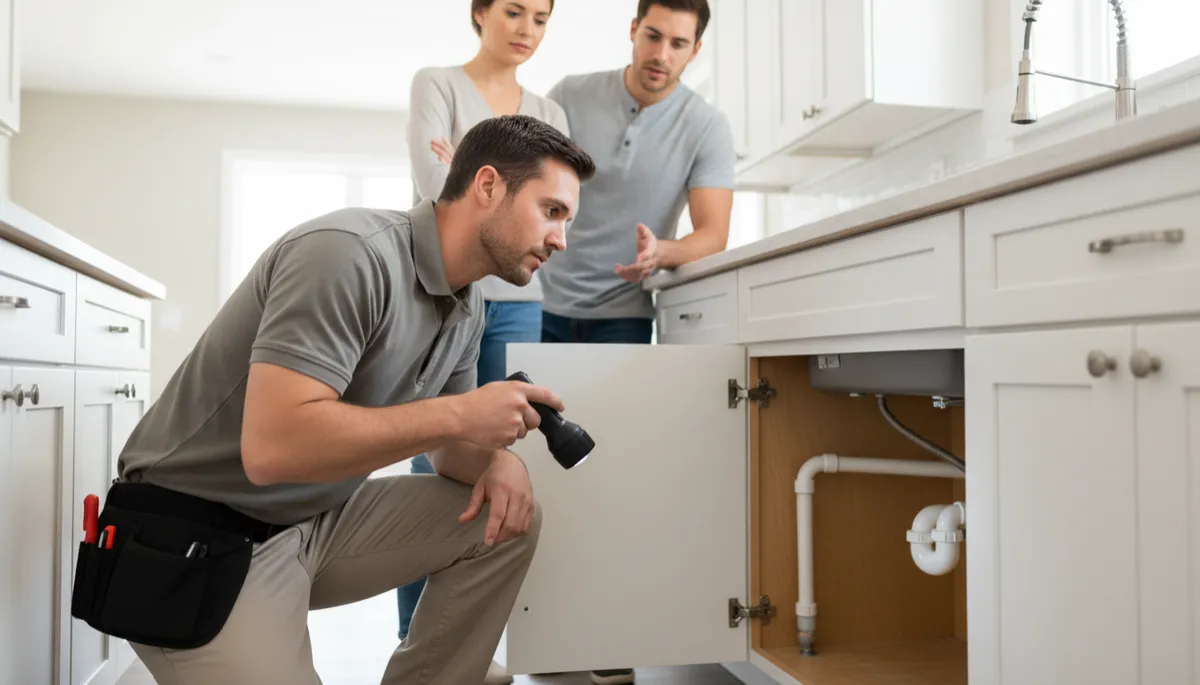
A thorough condition review reveals hidden costs that should affect your offer.
Key questions to ask during showings: “How old are the major systems?” “Have there been any leaks, foundation repairs, or insurance claims?” “What upgrades have been done, and when?”
3. Calculate Repair and Upgrade Costs Realistically
Once you understand the property’s condition, put numbers to the work it needs. An overpriced home often “looks fine” at first glance but requires tens of thousands of dollars in deferred maintenance or cosmetic updates that the asking price doesn’t reflect.
A Sample Repair Cost Breakdown
Suppose the inspection and your walkthrough reveal the following:
Roof nearing end of life: estimated $12,000 to replace.
Original 1980s kitchen: $20,000 for a mid-range remodel.
Two dated bathrooms: $10,000 each for updates ($20,000 total).
Minor electrical upgrades: $3,000.
Total: roughly $55,000. If comparable, updated homes are selling for $500,000 and this home is listed at $490,000, it is effectively overpriced once you factor in the work. A more reasonable target might be closer to $445,000–$450,000 to account for the renovations.
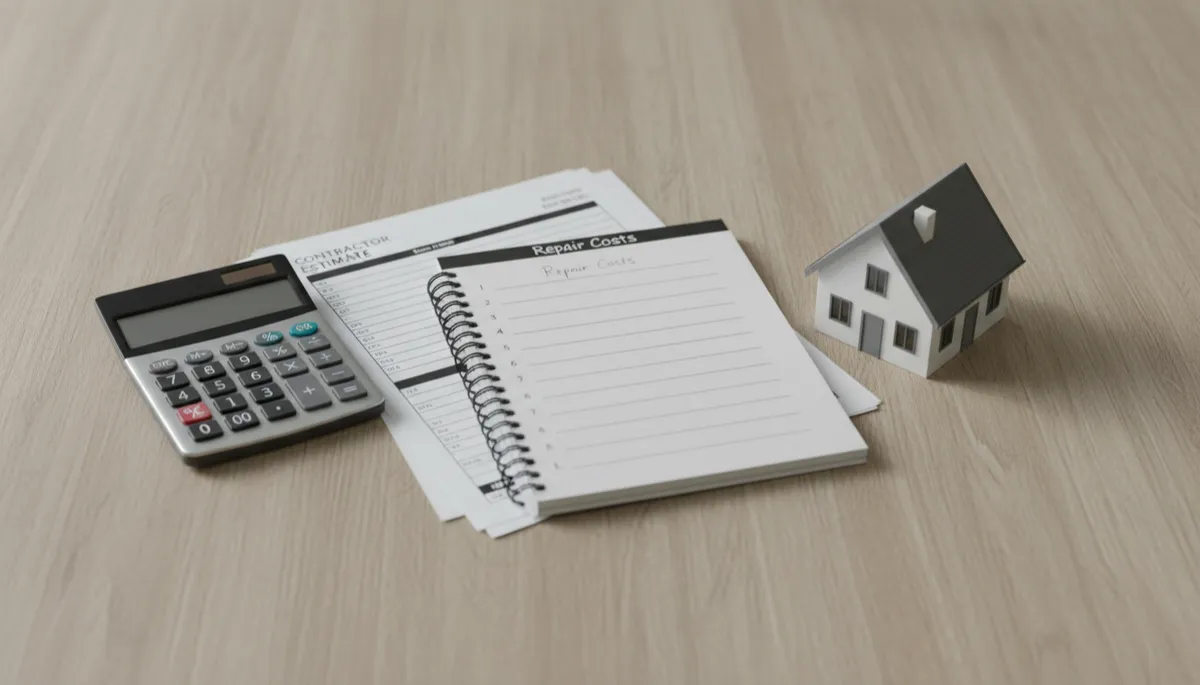
Put real numbers to needed repairs so you can adjust your offer logically.
Questions to ask before making an offer: “What are realistic ballpark costs for the major repairs?” “Do I have quotes or just guesses?” “Can I afford these projects on top of my mortgage?”
4. Assess Location and Features, Not Just the House Itself
A home’s value is heavily influenced by its surroundings. Two nearly identical houses can have very different prices if one backs to a busy road and the other sits on a quiet cul-de-sac. When you compare the asking price to comps, adjust for the specific location and features that truly affect desirability and resale value.
Micro-location: Street traffic, proximity to schools, parks, and noisy commercial areas.
Lot and orientation: Yard size, privacy, sun exposure, views, and slope.
Community factors: HOA rules and fees, walkability, public transit access, and school ratings.

Location and lot quality can justify price differences—or expose overpricing.
Ask yourself: “If I had to resell in two to five years, would buyers pay a premium for this exact location—or discount it?”
5. Market Value vs. Asking Price: Understanding the Gap
The asking price is simply the seller’s opening statement. Market value is what informed buyers are actually willing to pay, based on recent sales and current conditions. In a hot market, some sellers intentionally price low to spark bidding wars. In a slower market, others cling to last year’s prices and overshoot.
Signs a Home May Be Overpriced Relative to Market Value
It’s priced significantly higher than recent, truly comparable sales after adjusting for condition and features.
It has been on the market much longer than similar homes nearby with few or no price reductions.
Multiple showings, but no offers—or offers that fell through over price disagreements.
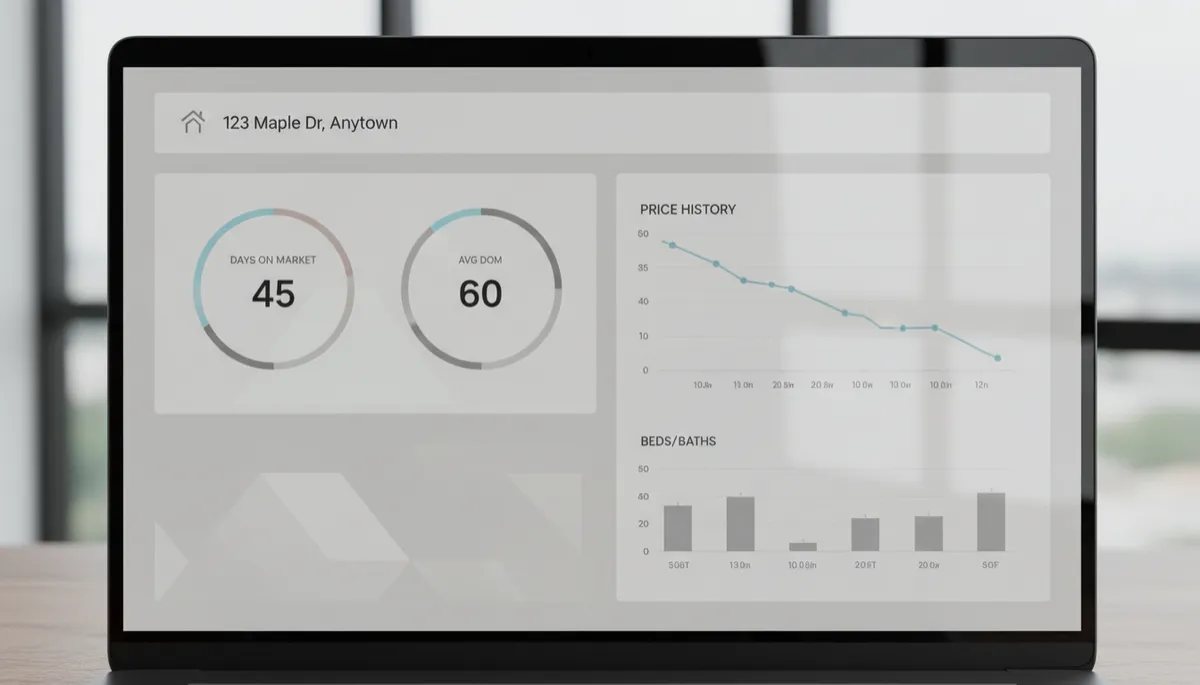
Days on market and price history help you see how buyers are reacting.
Questions to ask your agent: “How does this home’s price per square foot compare to recent sales?” “What is the average days on market for similar homes, and how does this listing compare?”
6. Considering Renovation Potential: Hidden Value or Money Pit?
Sometimes, an apparently overpriced home makes sense if it offers exceptional renovation potential. Perhaps the floor plan can be opened up easily, the unfinished basement can add living space, or the lot allows for an addition. The key is to compare what the home could be worth after improvements to what it costs today plus renovation expenses.
A Simple Renovation Math Example
You’re looking at a dated home listed at $430,000. Updated homes in the neighborhood sell for around $520,000. Your contractor estimates $60,000 to modernize the kitchen, baths, and flooring.
Purchase price: $430,000
Renovation budget: $60,000
Total investment: $490,000
If the finished home should reasonably be worth $520,000 in today’s market, there is potential equity. But if the seller insists on $460,000, your total investment jumps to $520,000, leaving little to no cushion. In that case, the home may be effectively overpriced once renovations are accounted for.

Renovation potential only adds value if the numbers work in your favor.
Ask before you offer: “What will this home likely appraise for after renovations?” “Am I comfortable with the time, cost, and stress of the projects required?”
7. Key Questions to Ask Before Making an Offer
Bringing everything together, use these questions as a checklist to decide if a home is overpriced and what you should reasonably offer:
Comps: “What would this home be worth if it were listed today at the same time as the recent comparable sales—and how does that compare to the asking price?”
Condition: “How does the condition compare to those comps? Better, similar, or worse?”
Repairs: “What are realistic costs for repairs and updates in the first three years of ownership?”
Location: “Would most buyers see this specific street, lot, and neighborhood as a plus, neutral, or minus?”
Market: “Is this a buyer’s market, a seller’s market, or somewhere in between right now?”
Renovation potential: “If I improve this home, will the market reward that investment—or am I overbuilding for the area?”

A written checklist keeps your offer grounded in facts, not excitement.
8. Putting It All Together: An Analytical Framework for Your Offer
To avoid overpaying, think of your offer as the result of a simple formula:
Estimated market value (based on comps) minus repair and upgrade costs plus or minus adjustments for superior or inferior location and features equals your target offer range.
Then, overlay your personal factors: How badly do you want this specific home? How tight is inventory? How long has it been on the market? This helps you decide whether to come in at the low, middle, or high end of your range—or walk away if the seller’s expectations are unrealistic.

Use a structured framework with your agent to define a fair offer range.
The Payoff of an Informed, Analytical Approach
Homes are emotional purchases, but they are also major financial decisions. By systematically comparing comparable sales, evaluating property condition, calculating repair costs, assessing location and features, understanding market value versus asking price, and weighing renovation potential, you give yourself a clear advantage in any market.
Sometimes, your analysis will confirm that a home is fairly priced—or even a bargain. Other times, it will reveal that a “dream home” is simply too expensive for what it offers. In both cases, your goal is the same: to make a calm, informed choice that fits your budget, your lifestyle, and your long-term plans.

Confident buyers are those who understand the numbers behind the purchase.
Ready to Find Out What Your Home Could Be Worth?
Before spending thousands of dollars on renovations, get a professional perspective on what your property actually needs.
Get Your Free Home Valuation
or